BLOCKADE OF HORMUZ STRAIT & GLOBAL OIL CRISIS
The blog “BLOCKADE OF HORMUZ STRAIT & GLOBAL OIL CRICIS” is written by Mr. Tapan Kumar Das, Skill Development Officer of MIES R.M. Law College affiliated to Vidyasagar University.The Strait of Hormuz is one of the world’s most important energy chokepoints. Around 20% of global oil consumption and a major share of LNG exports pass through this narrow sea route connecting the Persian Gulf to the Arabian Sea. A blockade or severe disruption in Hormuz can trigger a global oil crisis, causing:
- Sharp rises in crude oil prices
- Inflation worldwide
- Supply-chain disruptions
- Stock market volatility
- Energy shortages in oil-importing countries
At MIES R M Law College, Sonarpur, South Kolkata—one of the leading law colleges in West Bengal—students gain in-depth knowledge of constitutional rights and social justice through its 3-year law program. As a Bar Council of India–approved institution affiliated with Vidyasagar University, the college offers quality legal education in India, supported by an active placement cell, regular internship opportunities, and a well-equipped campus with modern facilities that enhance both academic and professional growth.
BLOCKADE OF HORMUZ STRAIT & GLOBAL OIL CRISIS .
1. Introduction to BLOCKADE OF HORMUZ STRAIT
Oil energy regulates the world by serving as the ultimate backbone of global transportation, manufacturing and geopolitical power. Its price and availability directly dictates worldwide inflation, supply chain costs, and the economic stability of both oil-rich nations and heavy consumers.
2. Prevalent oil crisis in the world
At present there is a widespread, among disruption in the global supply of crude oil that leads to severe shortages & sky rocketing fuel prices. Because modern economics rely heavily on oil for transportation, manufacturing, and energy, these crises trigger global inflation, raise shipping costs and threaten economic stability.
3) Location of Hormuz strait, its dimensions & width with its shipping lanes and connectivity.
The Strait of Hormuz is situated between Iran to the north, and the United Arab Emirates and Oman (the musendam peninsula) to the South. It is a vital, narrow maritime chokepoint in the Middle East that connects the Persian Golf to the Gulf of Oman and the Arabian Sea. Moreover, it serves the only sea rout for oil and gas exports from Persians Gulf to the open ocean.
It is, about 104 miles (167km) long. It narrows to about 24 miles (39 km) as its most constricted point.
Its shipping lanes i.e navigable channels are restricted . Just two (2) mile wide for both incensing and outgoing traffic/carriage ships & containe of oil & gas.
The, Strait of JHormuz is governed by transit passage under Internation Coustomery Law, however, tensions often arise because the United State and Iran areboth notable holdouts that have not ratified the UN Connection on the Law of the Sea (UNCLUS). This Strait of Hormuz is a narrow ship of sea between Iran & Oman connect the Parsian Gulf in the Gulf of Oman and rest of the world.
4. The causes of oil crises in the world
A oil crisis (or oil shock) occurs when a sudden disruption in global oil supplies causes crude prices to spike triggering widespread economic instability. In today’s interconnected world, these crises are typically driven by a combination of geopolitical conflicts, production decisions, demand shifts and infrastructure limits.
Geopolitical conflict
Supply disruption because of wars, civil unrest or blockades in major oil producing regions like the Middle –East which can physically halt production or prevent safe shipping through critical maritime bottlenecks.
Sanctions and trade wars such as political embargos or government sanctions such as restriction on Russian Oil Limit supply and force countries to scramble for alternative energy sources.
The Organisation of the petroleum Exporting countries and all qualities heavily influence global prices. Nevertheless, it cartel artificially slashes productions quotas to drive up prices, it can trigger an immediate global supply crunch.
Rapid demand surges during periods of rapid global economic recovery, energy demand can spike faster than oil companies can drill, refine and transport the product.
Underinvestment in infrastructure because of a lack of capital investment in new drilling, pipelines and refineries over several years makes the global market highly vulnerable, meaning even a small supply hiccup can cause massive price volatility.
5. Currency and microeconomic factors
a) Since the global oil prices are measured in U.S. dollars, a weakening dollar often causes oil prices to rise. Conversely, a strengthening dollar makes oil more expensive for emerging economies, altering global consumption. Due to force majeure caused by Hurricanes, earthquakes or severe accidents do damage major offshore drilling rigs or coastal refineries can instantly remove millions of barrels from the daily supply.
6. Indias present position in regard to oil demand & import.
India is the world’s third largest oil-consumer and importer, relying on imports for over 85% of its crude needs. To fulfill this demand, India primarily relies on Middle Eastern suppliers and heavily discounted Russian crude. This massive import dependency makes the Indian economy highly vulnerable to global price fluctuations.
India’s import depending routinely hovers around 87% to 88% making energy security a top priority for the government.
India’s rapid industrialization and expanding transportation sector drive a steadily increasing appetite for petroleum products.
Russia has emerged as a major supplier, alongside traditional partners like Iraq and Soudi Arabia, allowing India to refine and export products like diesel and jet fuel.
India’s Economic vulnerability is resulted from India’s vast imports oil causing inflate the country’s import bill, widening the current account deficit and driving up domestic inflation.
India walks a fine line, taking advantage of discounted Russian crude oil while maintaining strong strategic & energy ties with western nations & OPEC.
To buffer against global supply shocks, India maintain emergency strategic petroleum reserves (SPRs) In cavernous facilities capable of holding millions of barrels.
The heavy reliance on imports fossil fuels is a core driver for India’s push into renewable energy electric vehicles, and domestic bio- fuel blending programs to cap future import growth.
7. Recent disbalance is global oil supply due to blockage of the strait of Hormuz.
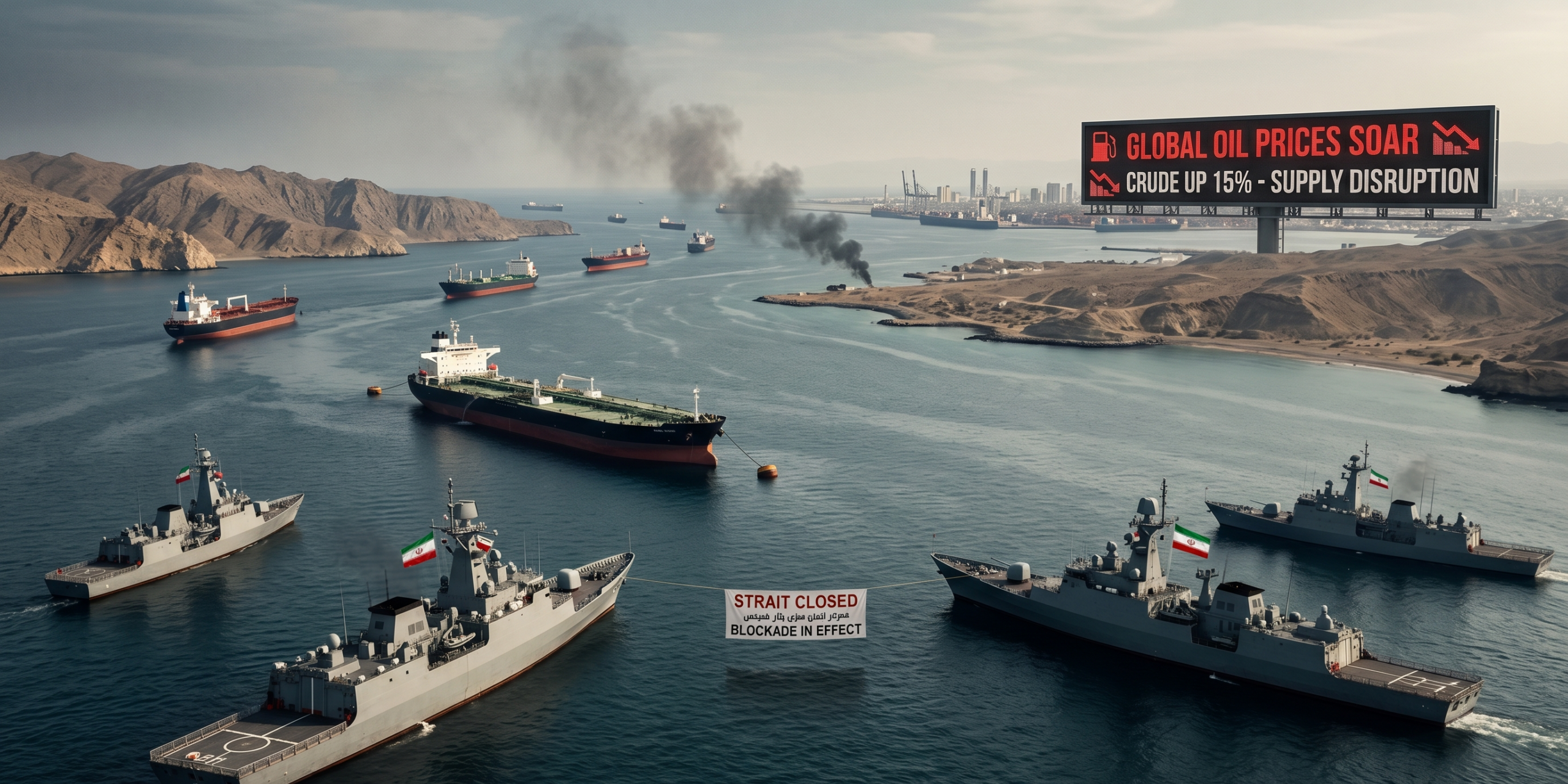
The strait of (Hormuz pranali) is the most vital energy chokepoint, handling roughly 20% of global petroleum liquids. A blocked means no oil or natural gas can safely leave the Persian gulf via this route, instantly wiping out millions of barrels of daily supply, spiking service worldwide economic strain.
8. Hormuz Blockade factors/events.
Based in event as of may 12, 2026 the USA is responsible for implementing a targeted naval blockade of Iranian ports in the strait of Hormuz to stop maritime trade into and out of Iran.
This action is a direct response to a broader 2026 maritime crisis where Iran had previously restricted traffic through the strait following an air war with the US & Israel that began an February 28, 2026. The US asserts it is restoring freedom of navigation for neutral vessels which creating an enhanced security area but others say it is an act of aggression against Iran.
The Strait of Hormuz is recognized under International law as a vital International strait where ships have a legal right to transit passage, meaning it cannot be legally blockade or suspended by coastal states. As a crucial clock point handing 20% of global oil trade, its legal status ensure free uninterrupted passage for all commercial & military traffic.
9. How Hormuz Blockade affects the Global Oil Supply Balance.
Nearly 21 million barrels of crude oil and condensate flow through this strait of Hormuz daily. Blocking it creates a instantaneous and massive difficult in the global supply balance, which cannot be immediately affect by other regions.
Much of the World’s spare oil production capacity is held by Gulf nations. A blockade physically traps this capacity, eliminating the world’s emergency buffer to absorb shocks.
The abrupt imbalance triggers skyrocketing crude, gasoline, and diesel price worldwide.
The scope with the difficult, countries is forced to rely on their emergency strategic petroleum reserves, which can only provide a temporary cushion.
10. Which countries are most affected due to Hormuz blockade
a) India
India is highly dependent on Middle East oil, India suffers severely. The combination of higher import bills and currency pressure risks significant inflation and economic drag.
b) China
China, as the world’s largest importer of crude, China relies heavily in the Persian Gulf. While it has some imploratic maneuvering room, the sheer volume of its energy demand exposes its economy to the price shocks.
c) Asian exporters & Emerging Markets.
Countries like Japan, Thailand, Indonesia & the Philippines face immense macroeconomic stress. With limited domestic oil production, these nations suffer disproportionately from expensive fuel & supply chain disruptions.
d) Europe
Heavy reliance on imported energy leaves some European countries vulnerable to the global price spikes, exacerbating inflation and slowing down economic growth.
11. Exporters of oil trapped by the Hormuz Blockade
Gulf Nations say Saudi Arabia UAE, Kuwait, Qatar & Iraq are the countries suffer direct revenue losses because their primary Export Route is shut off. However, some countries with pipeline access to alternative ports like Saudi Arabia redirecting oil to the Red sea to mitigate their losses by selling at inflated prices.
Thanks to high domestic production and supplies from Canada, the US. Relies relatively little on Persian Gulf crude compared to historical highs. While American still suffer at the gas pump due to the global nature of oil pricing, the U.S. economy remains more insulted t hen export reliant Asian or European nations.
Paradoxically, Russia often profit substantially during their supply crisis. Global oil price surges increase Russian Export Revenues and potentially reduce the discounts it must offer to bypass sanctions.
12. What is the consequences & remedy of such imbalance trend of oil supply
When trends like supply deficits or depleting reserves continue in global oil marked, the immediate consequence is sustained, high volatility in energy prices. This drives up the cost of transportation, manufacturing & food, ultimately fueling widespread inflation. Furthermore under investment in new production can lead to severe energy shortage.
High oil prices act as tax on consumers & business. It raises operational cost across nearly all sectors, slowing down global economic growth.
As oil become scarce, nations may complex aggressively for control over remaining reserves, heightening political fiction & trade disputes.
Without a managed transition, scarcity can force countries to rely as cheaper, dirtier alternatives (such as high-sulfur coal) to meet their basic energy needs.
To stabilize energy markets & prevent long term-crises, a multi-pronged approach is required.
Scaling up alternatives like solar, wind and geothermal reduces overall dependence on fossil fuels. One can explore transition road maps on the International Energy Agency website.
Also by upgrading infrastructure, investing in public transit, and adopting stricter fuel-efficiency standards can helps the global economy do more with less oil.
While phasing out oil, (like national gas) and advancing grid-scale battery shortage prevent sudden energy chiff .
So by shifting to Electric vehicles (EVs) directly crude oil consumption in the largest demand sector. One can check EV adoption incentives on the U.S. Department of Energy point.
13. Why the strait of Hormuz (pranali) is a concern to the world?
The strait of Hormuz is a global concern because it serves as the world’s most critical energy chokepoint. Roughly 20% of the world’s daily petroleum supply and 20% of globally traded Liquefied Natural Gas (LNG) must pass through this narrow maritime corridor. Hence any conflict or blockage in this trait immediately spikes global oil prices. Because so many economics rely Middle Eastern crude (like Saudi Arabia, Iraq and the UAE), supply disruptions quidely trigger inflation and higher cost world wide.
The strait is bordered by on one side and Oman & UAE on the other. Because Iran has historically threatened to close the passage or hears tankers during political standoff; the area acts as a sever security risk that can draw intentional military interaction.
There are a very few land-based pipelines that neighboring countries can use to bypass the strait, because major Gulf states have to export their energy resources mainly through this strait of Hormuz, else their economics will collapse crippling global oil supply chain.
Conclusion: BLOCKADE OF HORMUZ STRAIT & GLOBAL OIL CRISIS
An oil crisis is a sudden and dramatic spike in global oil price, typically caused by geopolitical conflicts, supply chain disruptions, or embargos. Such crisis threatens economic stability by triggering high inflation and trade deficits, exposing the urgent need for a diversified energy transition. However, the world political powers can unitedly solve this crisis through unpretentious & peaceful understanding, harmony & unity among the prominent political and economic power and the major oil producing countries of the world.
The Strait of Hormuz is the lifeline of global energy trade. Any blockade can rapidly transform a regional conflict into:
- A worldwide oil shock
- Inflation crisis
- Trade disruption
- Economic slowdown
For countries like India, the consequences are especially serious because of heavy dependence on imported oil.
The crisis also highlights the strategic importance of:
- Energy diversification
- Strategic oil reserves
- Renewable energy transition
- Maritime security
MIES R M Law College, Sonarpur, South Kolkata, contribute significantly to this mission by nurturing future legal professionals who are equipped to address issues of education, social justice, and public policy. As a Bar Council of India–approved law college affiliated with Vidyasagar University, the institution emphasizes both academic excellence and practical exposure, preparing students for careers in law, governance, and advocacy. By fostering awareness and critical understanding of fundamental rights like education, MIES R M Law College plays a vital role in shaping a more just, informed, and inclusive society.
_____________